
COP30, Clouds, ARARA and Araras
December 9, 2025
By Rob DeLaet
Member of the EcoRestoration Alliance

Rob de Laet, Atossa Soltani and Domingo Paes at COP30
Rob DeLaet is proud to stand with two of the world’s key climate warriors, Atossa Soltani and Domingo Paes of the Amazon Sacred Headwaters Alliance, representing a territory the size of Italy protected by Indigenous peoples in Ecuador and Peru. Real climate solutions won’t come from conference podiums at COPs, but from the forest floor.
The world must get behind this kind of leadership to protect what is left and restore what is broken and rebuild our economies around living ecosystems.
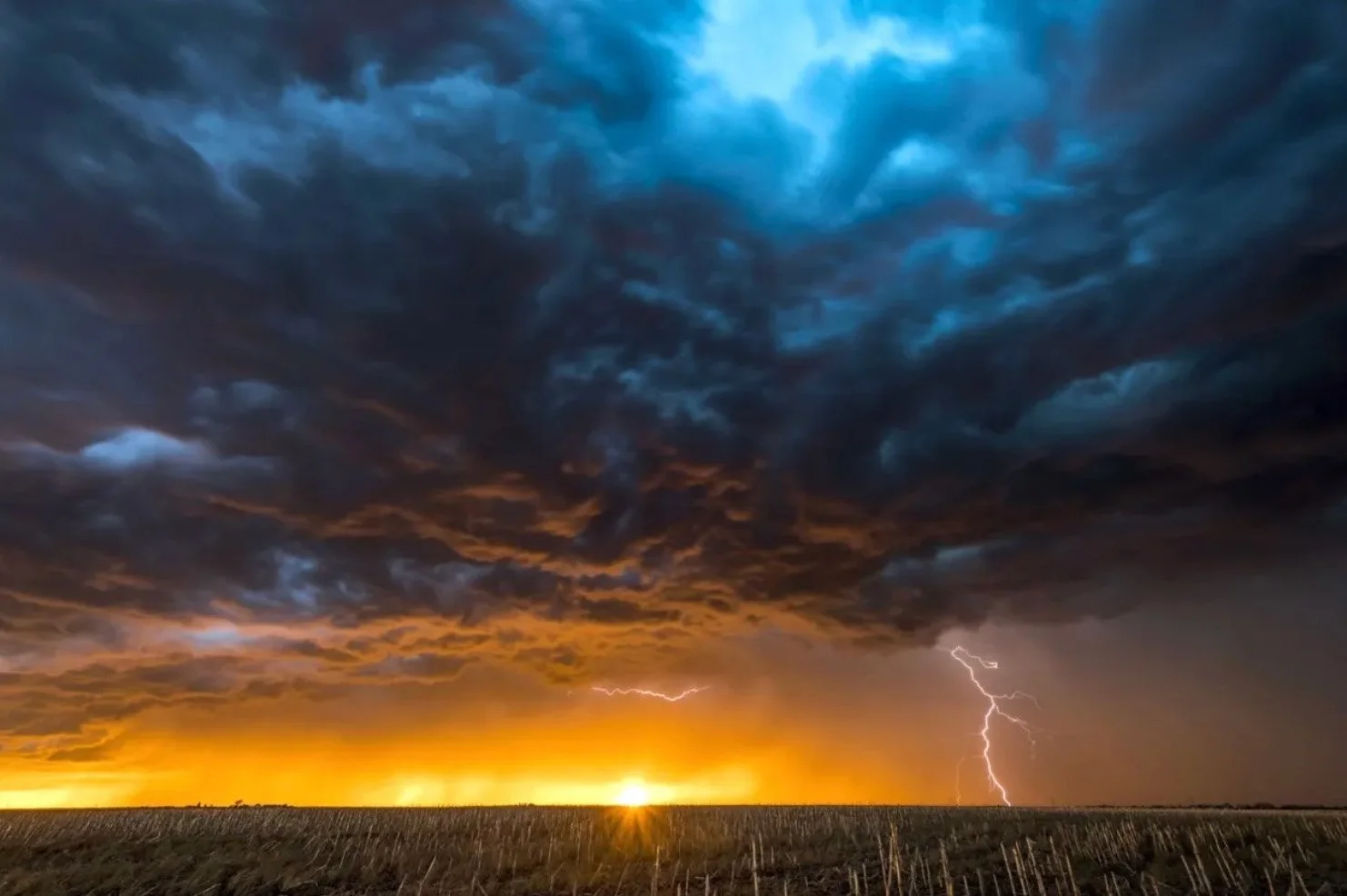
Ominous clouds and thunderbolt over a field
Why Clouds are Key to Solving the Climate Crisis
We are still telling only half the climate story. Almost all attention goes to carbon dioxide, yet the biggest share of today’s warming is now coming from the way the planet’s reflective skin is changing-especially clouds. And right in the middle of that story sit the great rainforests, which are not just carbon stores but powerful cloud-making, cooling engines.
James Hansen’s recent work makes this crystal clear. He estimates that doubling CO₂ would warm the planet by about 4.5°C, but only around 1.2°C of that comes from the direct greenhouse effect. The other ~2.8°C comes from feedbacks-changes in water vapour, ice, snow and, crucially, clouds. In other words, most of the heat we are now feeling is arriving via the Earth system’s response, not from the raw CO₂ forcing alone. That is why Hansen can say that “the effect of GHGs on Earth’s albedo is negligible”-greenhouse gases hardly absorb sunlight directly; only once the sun’s energy bounces back from the Earth’s surface does it heat up the atmosphere. So that little bit of warming is now massively amplified by albedo and cloud feedbacks.
Satellite data back this up. Since about 2000, Earth has started absorbing roughly an extra 1–2 watts per square metre of sunlight because its reflectivity has dropped as clouds and ice retreat. That extra absorbed solar energy is comparable to the added greenhouse trapping over the same period-meaning albedo loss is not a side issue, it is now a central driver of the acceleration in warming.
Rainforests are deeply entangled with this albedo story. Through intense evapotranspiration, they pump huge amounts of water vapour into the atmosphere. Forests also release biological particles that act as cloud seeds. Together, these processes help form bright, low clouds that reflect sunlight and export heat upwards and polewards when the vapour condenses. When we cut or dry out those forests, we don’t just release CO₂; we weaken one of the planet’s main natural systems for making cooling clouds.
Yet in policy and modelling, this cloud-making function of forests is barely visible. National climate plans still treat tropical forests mainly as carbon stocks or offsets. Debates about “cooling the planet” are framed almost entirely in terms of emissions, carbon removal and, at the margins, engineered solar radiation management-while the largest, safest, already-existing cooling technology we have, the living biosphere, is being damaged every day.
If most of the extra heat now entering the system is coming through albedo and cloud feedbacks, then restoring the systems that control clouds must move from the margins to the centre of climate strategy. Protecting and regenerating rainforests is not just about storing carbon for 2050. It is about repairing the planet’s cloud machine-one of the largest, most immediate cooling mechanisms our living Earth still has.
Goessling, H. F. et al. (2025). Recent global temperature surge intensified by record-low planetary albedo. Science. https://www.science.org/doi/10.1126/science.adq7280
Hansen, J. E. et al. (2025). Global Warming Has Accelerated: Are the United Nations and the Public Ready for This? Environment: Science and Policy for Sustainable Development. https://www.tandfonline.com/doi/full/10.1080/00139157.2025.2434494
Hansen, J. E. et al. (2023). Global warming in the pipeline. Oxford Open Climate Change. https://academic.oup.com/oocc/article/3/1/kgad008/7335889
Loeb, N. G. et al. (2021). Satellite and Ocean Data Reveal Marked Increase in Earth’s Heating Rate. Geophysical Research Letters. https://agupubs.onlinelibrary.wiley.com/doi/10.1029/2021GL093047
Bunyard, P. P., Collin, E., de Laet, R., Hodnett, M., & Fourman, M. (2024). Restoring the earth’s damaged temperature regulation is the fastest way out of the climate crisis. Cooling the planet with plants. International Journal of Biosensors & Bioelectronics, 9(1), 7–15. https://medcraveonline.com/IJBSBE/IJBSBE-09-00237.pdf
ARARA: From Blueprint to the First Bioeconomic Shop in the Colombian Amazon
As 2025 comes to a close, we’re starting to see one of our core ideas take real shape: if we want to cool the climate, we have to pay everyone in forests who protects and restores it-and we need rock-solid digital tools to prove what’s happening on the ground. And the Amazon is the place to start as the planet’s largest rainforest and most important cooling organ of our living Earth.
Together with our friends at OpenForests , we’ve been designing exactly that backbone for ARARA: a digital MRV blueprint that links smallholders and Indigenous guardians to transparent finance, turning real regeneration into verifiable ecological credits and steady income.
In the article linked below, OpenForests walks through this ARARA blueprint and the six-step journey from “Onboard” to “Verify & Earn” in the Amazon. And we’re excited to share that in 2026 we’ll open the very first ARARA bioeconomic shop in the Colombian Amazon — a local hub where families can register their land, co-design restoration plans, access finance and training, and get paid for the living forest they care for. This is where Cooling the Climate becomes very concrete: one shop, one territory, one restored landscape at a time.
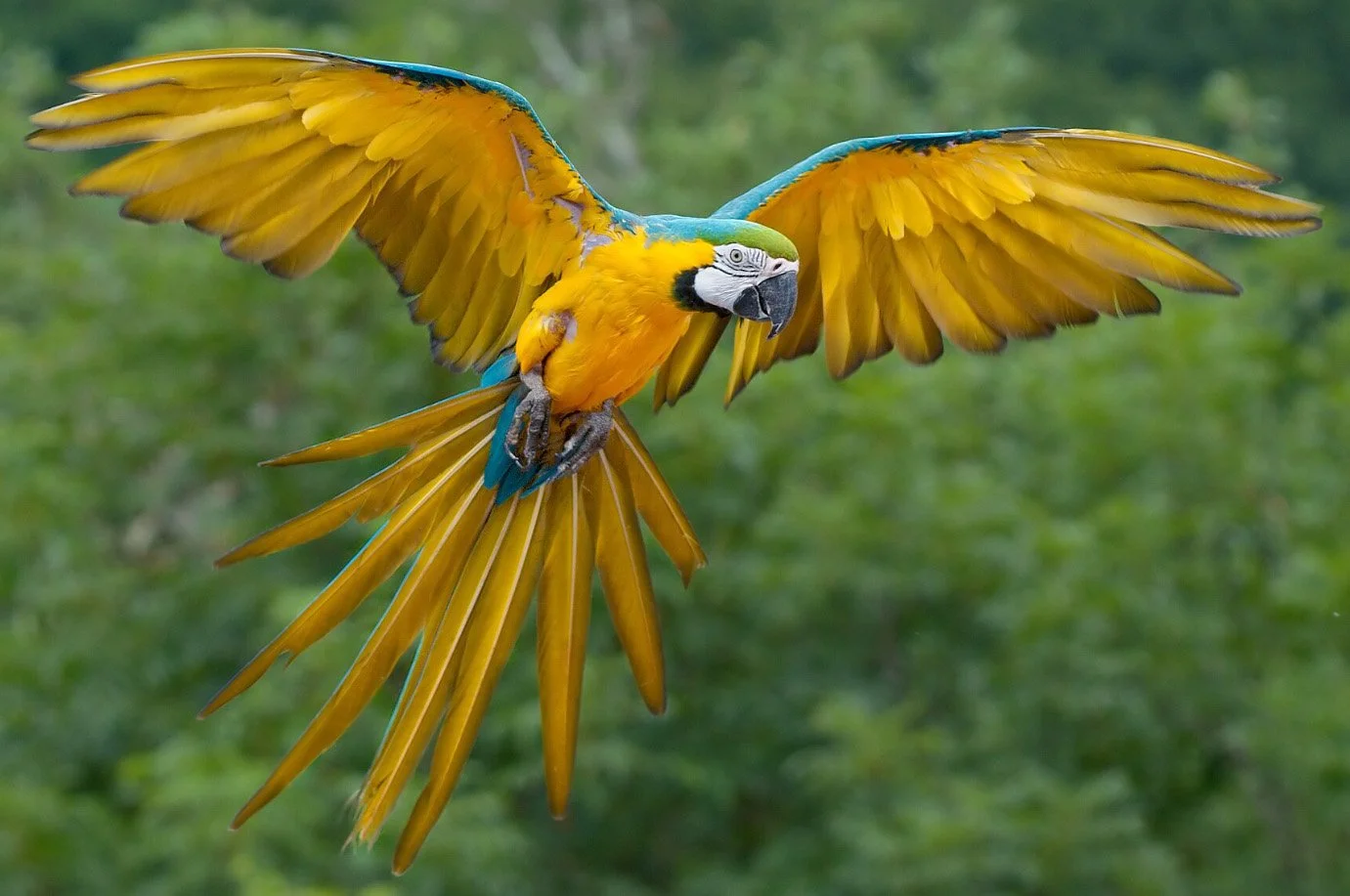
Arara: the most colorful birds of the Amazon Rainforest. Photo by Luc Viatour

The video linked below uses a combination of real recordings and AI animations and enhancements to give you a great impression of the immense beauty and wealth of Amazon birdlife. Enjoy!
https://www.youtube.com/watch?v=bguIlqoD6S0
Originally published at https://www.linkedin.com.
+
Read more of our blog posts on Medium